
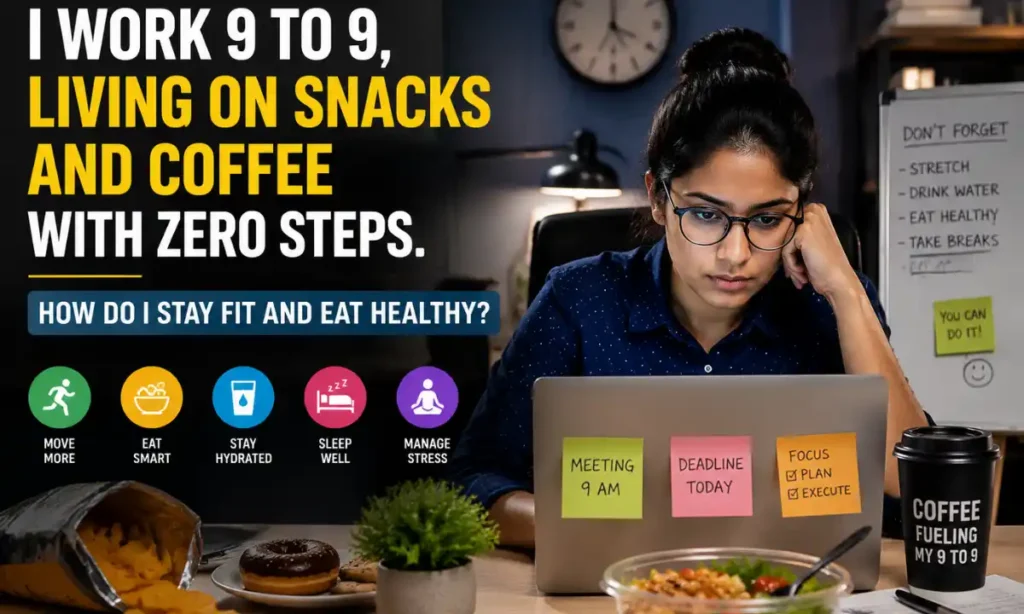
Working 12‑hour days (9 AM to 9 PM), surviving on quick snacks and endless cups of coffee, and barely moving a muscle this lifestyle has become all too common in today’s fast‑paced world. But such routines can quietly damage your metabolism, energy levels, posture, and long‑term health if you don’t make intentional changes. The good news? You don’t need to overhaul your life entirely. With smart planning, feasible habits, and a few mindset shifts, you can stay healthy, energized, and fit even with a demanding schedule.
Why a 9‑to‑9 Workday Affects Your Health
A demanding workday affects health more deeply than just tiredness. Prolonged sitting and lack of movement weaken your metabolism, increase risk of chronic conditions like diabetes and heart disease, and strain your back and joints. Combine this with frequent sugary snacks, multiple cups of coffee with sugar and milk, and irregular meals late at night and your body enters a metabolic state where fat accumulates, muscles weaken, sleep quality drops, and stress hormones rise.
This pattern doesn’t show immediate harm, but over months and years leads to fatigue, weight gain, hormonal imbalance, and increased risk of lifestyle diseases.
Office Snacks and Coffee -The Real Issue
It’s not about blaming meals it’s about understanding their impact:
- Refined biscuits and chips spike blood sugar quickly and crash energy soon after.
- Sweetened chai or coffee multiple times a day adds hundreds of empty calories without real nutrients.
- Instant noodles or fried canteen food are high in sodium and unhealthy fats, leading to bloating and sluggishness.
- Packaged fruit juices may seem healthy but often contain as much sugar as soda.
Repeated consumption of these fuels cravings, ups insulin spikes, and makes your system burn through energy inefficiently.
Healthy, small replacements like roasted legumes, whole fruits, unsweetened black coffee or green tea, and protein‑rich snacks — can stabilize blood sugar, reduce cravings, and sustain energy better.
What a Realistic Healthy Day Looks Like on a 9‑to‑9 Schedule
Here’s a practical framework built specifically for your life one that doesn’t require a gym membership or early morning workout:
Before Leaving Home (15 Minutes)
- Drink two glasses of water first thing hydration after sleep kicks your metabolism into gear.
- Have a quick protein‑rich breakfast like boiled eggs or a banana to prevent early morning hunger.
- A few gentle stretches neck rolls, shoulder rotations help you feel limber before hours of sitting.
During Work – Small Choices That Add Up
- Take the stairs for a few floors before switching to the lift this adds meaningful steps with no time loss.
- Keep a water bottle at your desk and aim to drink frequently dehydration mimics hunger and makes you feel tired.
- Stand up during calls when possible. Walk to a colleague’s desk instead of messaging. These tiny movements across the day add up to hundreds of extra steps and better circulation.
Lunch – The Big Fuel Moment
The most impactful meal of your day should include real, balanced food:
- Carrying homemade lunch like dal, rice, sabzi, roti, sprout salad gives you protein, complex carbs, and fibre that keep energy levels stable.
- If you can’t carry food, favor sabzi with roti or a wholesome thali over heavy biryani or fried options.
Afternoon Energy Boost
At 3‑4 PM you may feel a slump. Instead of vending machine snacks, choose:
- Roasted chana, peanuts, or a fresh fruit.
This stabilizes blood sugar and curbs cravings for unhealthy snacks.
Dinner – Timing Matters
Eating very late can affect sleep and metabolism. If your schedule forces dinner after 9:30 PM, keep it light think khichdi, dal, curd rice, or vegetable soup foods that are easy on digestion and don’t overload your system at night.
Easy Movement Solutions With Zero Extra Time
You don’t need “exercise time” carved out just movement triggers throughout your day:
- Desk micro‑exercises: calf raises, seated twists, shoulder circles done between tasks or during phone calls.
- 2‑minute rule: Any activity that takes 2 minutes or less do it immediately. Walk to refill your water bottle, stand while eating lunch, take another lap to the washroom on a different floor.
- Weekend movement banking: Taking two 45‑minute walks on weekend days maintains basic cardiovascular health and helps reset your system.
This kind of intermittent movement counters the damage of prolonged sitting and helps maintain mobility without conflicting with your schedule.
Meal Prep Strategies for the Busy Professional
The biggest barrier to healthy eating isn’t willpower it’s time and planning. Here’s how to solve that with minimal effort:
- Sunday Meal Prep (45 Minutes): Cook dal in batches, boil eggs, wash/chop vegetables, prepare breakfast staples like poha or upma.
- Tiffin Ideas That Travel Well: Dal rice, multigrain roti with sabzi, curd rice with pickles, sprout salad with lemon and spices, boiled eggs with fruit and nuts.
These options are balanced, satiating, and require virtually no preparation in the morning, making them ideal for your routine.
Hydration – The Simplest Change That Makes the Biggest Difference
Many long‑hour workers are mildly dehydrated all day without realising it. Even slight dehydration can cause headaches, fatigue, and lack of focus. A simple hydration habit can change how you feel:
- 2 glasses of water first thing,
- A glass before each meal or snack,
- Keep a large water bottle at your desk and refill it,
- A glass before bed.
Plain water, nimbu paani (without sugar), coconut water, and buttermilk are excellent ways to stay hydrated.
In Summary – Small Choices, Big Gains
The 9‑to‑9 work lifestyle isn’t built for optimal health but that doesn’t mean you have to surrender your well‑being. With consistent, simple adjustments:
- Hydrate before you caffeinate,
- Replace a couple of snacks weekly with healthier alternatives,
- Carry lunch from home most days,
- Add micro‑movement throughout your day,
- Eat dinner early when possible
you can significantly reverse the negative effects of prolonged sitting, poor diet, and caffeine dependence. These changes don’t require extra time slots they integrate seamlessly into your day.
Health isn’t about perfection – it’s about making better choices again and again.
Also read about: How to Whiten Teeth at Home: Effective and Safe Methods