
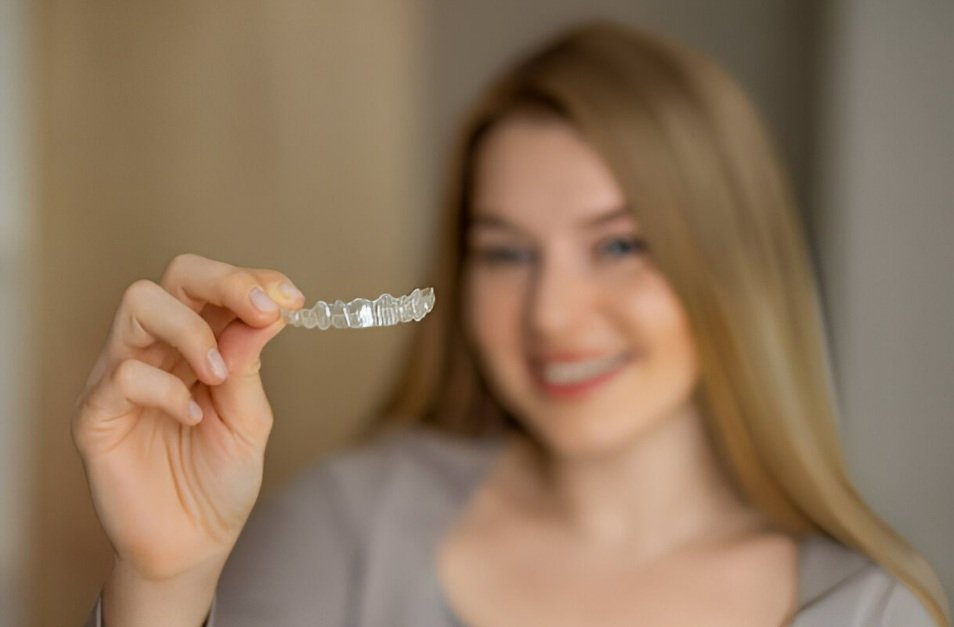
Invisalign sounds almost too good to be true. Clear trays, no metal, fewer food rules, and you can take them out for photos, dates, and tacos. So it makes sense that people ask, “Can anyone get Invisalign?”
Most people can. But there are a few situations where Invisalign is either not the right tool, or it won’t work well without extra treatment first. And sometimes “disqualified” really means “you’re a better candidate for braces” or “we need to fix a few dental issues before we start.”
Let’s break it down in plain English.
First, what “disqualified” really means
Orthodontic treatment is like remodeling a house. If the foundation is cracked, you don’t start with paint and new furniture. You fix the structure first.
With Invisalign, the biggest reasons someone gets told “no” usually fall into three buckets:
- The bite problem is too complex for aligners alone
- Your teeth or gums aren’t healthy enough yet
- The treatment depends heavily on you actually wearing the aligners
Now let’s talk specifics.
Severe bite problems that often need braces or surgery
Invisalign can handle a lot, including crowding, spacing, mild to moderate overbites, and many crossbites. But there are limits, especially when the issue is more “jaw position” than “tooth position.”
Underbite, when the lower jaw sits too far forward
If your underbite is mostly skeletal, meaning your jaw is the main issue, aligners can only do so much. You may need braces combined with jaw surgery, or a more involved plan. Learn more about Invisalign vs. braces to better understand what you may need.
Severe overbite, especially with a deep bite
A deep overbite can be tricky when the top teeth cover too much of the bottom teeth. Invisalign can treat many deep bites, but severe cases often need extra mechanics that are easier with braces.
An open bite caused by jaw growth or airway issues
Some open bites respond well to aligners, especially if it’s just the teeth tipping. But if the open bite is tied to jaw structure, tongue posture, or long-term habits, it may require a different approach.
Large bite shifts are needed, especially for back teeth movement
Moving molars and controlling the bite in the back can be harder with aligners in some complex cases. Some orthodontists can still do it with Invisalign, but there are cases where braces are simply more predictable.
Tooth movements that Invisalign may not control well in certain cases
Aligners work by gripping the teeth and applying pressure in a controlled direction. When the movement requires a lot of grip or very precise control, Invisalign can struggle, even with attachments.
These are common trouble areas:
Teeth that need big rotations
Some teeth, especially rounder ones like canines and premolars, don’t like to rotate neatly. Mild rotations are usually fine. Big rotations can be stubborn and may not track well.
Teeth that need significant vertical movement
Pulling a tooth down, pushing it up, or making major height changes can be less predictable with trays alone. This doesn’t automatically disqualify you, but it can push the plan toward braces or a hybrid approach.
Major root movement, not just tipping
Moving the root in a controlled way is harder than tipping the crown. Invisalign can do root movement, but cases that require a lot of torque and root control may be better handled with braces.
Dental issues that need to be treated before Invisalign
This one is huge. You don’t want to move teeth around on top of active disease.
Gum disease, bone loss, loose teeth
If you have active periodontal disease, Invisalign is often paused until your gums are stable. Moving teeth in a mouth with inflammation and bone loss can increase the risk of recession and tooth mobility.
The good news is this can be a “not yet” situation. Once your gums are treated and maintained, you may become a candidate.
Untreated cavities or ongoing decay
Aligners cover your teeth for most of the day. If you already have active cavities or you’re prone to decay, that environment can make things worse. Dentists usually want cavities treated first, and they’ll talk to you about better brushing, flossing, and fluoride habits before starting.
Poor oral hygiene habits
This is a quiet dealbreaker. Invisalign can look clean, but it’s not “low maintenance.” If brushing is inconsistent or flossing never happens, aligners can trap plaque and lead to cavities, gum swelling, and bad breath.
If your dentist says you’re not a candidate because of hygiene, it’s not a judgment. It’s protection. Fix the habits first, then revisit Invisalign.
Restorations that limit tooth movement
Certain dental work can complicate treatment, not because Invisalign is “bad,” but because some things in your mouth don’t move like natural teeth.
Dental implants
An implant is fused to bone. It does not move orthodontically. That means Invisalign cannot shift an implant the way it moves a natural tooth. If your plan depends on moving that tooth position, you may need a different strategy.
You can still sometimes do Invisalign around implants, but the plan has to respect the fact that implants are locked in place.
Bridges
Bridges connect teeth together. That reduces independent movement. If your orthodontic plan needs one tooth to move but it’s tied to another, that can be a problem.
Large crowns or short teeth with limited grip
If teeth are very short, heavily restored, or have an unusual shape, aligners may not grip well. An orthodontist can sometimes work around this with attachments, but in some cases braces are more reliable.
Noncompliance is the most common real-world dealbreaker
This part is blunt, but it matters.
Invisalign only works if you wear it.
Most orthodontists want you in aligners 20 to 22 hours a day. That means you take them out to eat, drink anything besides water, brush, floss, then they go right back in.
If you know you won’t wear them consistently, you’re basically paying for an expensive plastic souvenir.
Signs Invisalign might not fit your lifestyle right now:
- You snack all day and hate structured meal times
- You forget things easily and lose stuff often
- Your job makes brushing and rinsing hard during the day
- You travel constantly, and your routine is unpredictable
- You want “easy,” not “consistent.”
None of this makes you a bad person. It just might make braces the better choice, because braces work 24 hours a day whether you remember them or not.
Habits and conditions that can complicate Invisalign
These aren’t automatic disqualifiers, but they can change the plan.
Teeth grinding, clenching
Some grinders do fine with aligners. Others crack trays, wear through plastic, or create jaw pain. Your orthodontist may suggest a different material, slower changes, or a night guard plan.
Smoking and vaping
Not a strict disqualifier, but it increases gum disease risk and can stain aligners. If gum health is already borderline, this can tip you into “not yet.”
Ongoing jaw pain, TMJ issues
Aligners can sometimes help, sometimes irritate. If you have significant TMJ symptoms, your dentist might want to stabilize the joint situation first before moving teeth.
Why two Invisalign consultations can give different answers
One orthodontist might say you’re not a candidate. Another might say you are.
That doesn’t automatically mean someone is lying. Invisalign has evolved a lot, and orthodontists vary in experience, technique, and comfort level with complex cases. Some doctors also use a hybrid plan, Invisalign for part of the treatment and braces for certain movements.
If your case is borderline, it’s normal to get different opinions.
What to do if you got told no
Getting told you’re not a candidate can feel discouraging, especially if you had your heart set on clear aligners. But here’s the practical way to handle it.
Ask if it’s a “not now” or a “not ever.”
Sometimes the answer is simply:
- treat gum disease first
- fill cavities first
- replace failing dental work
- improve hygiene for a few months
Then Invisalign becomes an option.
Ask what the best alternative is, and why
If braces are recommended, ask what they’ll accomplish that aligners won’t. A good orthodontist can explain it clearly without scaring you.
Ask about hybrid options
Some people can do Invisalign for the majority of the treatment and braces for a short phase, especially if there’s one stubborn movement.
Bottom line
You’re usually “disqualified” from Invisalign for one of three reasons:
- Your bite needs more complex correction than aligners can reliably deliver
- Your teeth and gums need treatment first
- Your lifestyle won’t support consistent wear time
And a lot of the time, it’s not permanent. It’s a timing issue or a planning issue.
If you want the cleanest next step, get an orthodontic evaluation that includes proper records, scans, and X rays. A real plan beats internet guesswork every time, even mine.
Article by Dr. Sally Kashani.