
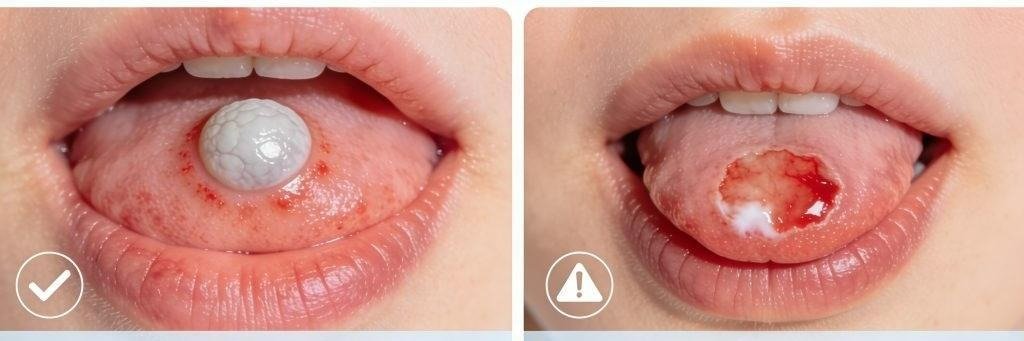
The main difference between a mouth ulcer and oral cancer is that most mouth ulcers are harmless and heal within one to two weeks, while oral cancer sores tend to persist, worsen over time, or appear with other concerning symptoms. Mouth ulcers are usually painful and linked to irritation, stress, or minor injuries, whereas oral cancer may begin as a painless sore, lump, or patch inside the mouth. Understanding the differences between these conditions can help you know when a mouth sore is likely harmless and when it may require medical attention.
Many people worry when they notice a sore inside the mouth that does not heal quickly. Comparing common ulcer symptoms with possible cancer symptoms can help identify when professional evaluation is necessary.
| Mouth Ulcer | Oral Cancer |
| Usually painful | May be painless early on |
| Heals within 1–2 weeks | Persists longer than 2 weeks |
| Soft, shallow sore | May feel hard or thickened |
| Often caused by irritation | May appear without clear cause |
| Round or oval shape | Irregular shape or raised edges |
| Usually harmless | Requires medical evaluation |
The comparison above highlights the key differences in the discussion of mouth ulcer vs oral cancer. While mouth ulcers are common and usually temporary, persistent sores should never be ignored.
Warning Signs a Mouth Sore Could Be Cancer
Certain symptoms may suggest that a mouth sore requires further medical evaluation rather than simple home care.
- Sore lasting longer than 2 weeks
- Red or white patches
- Lump inside the mouth
- Difficulty swallowing
- Unexplained bleeding
- Persistent numbness
- Loose teeth
- Jaw swelling
- Ear pain without infection
These possible oral cancer symptoms do not automatically mean cancer is present, but they should be examined if they continue or worsen over time. Oral cancer can affect the tongue, gums, cheeks, lips, throat, and floor of the mouth, and symptoms may develop gradually.
Most warning signs of cancerous mouth sores are similar in children and adults, but it is important to know that oral cancer is much rarer in children. In children, most mouth sores are usually caused by canker sores, infections, gum irritation, or accidental cheek or lip biting, and they are generally harmless. However, some symptoms may still require professional evaluation. Unlike adults, major risk factors such as smoking and alcohol use are typically not present in children, which is why most pediatric mouth sores are noncancerous. Still, if a sore looks unusual or does not heal properly, it should be examined by a pediatric dentist in Fredericksburg VA or doctor to rule out any serious concerns.
How Doctors Diagnose Mouth Ulcers vs Oral Cancer
Doctors and dentists use several methods to determine whether a mouth sore is a harmless ulcer or something more serious. The process usually begins with a physical examination of the sore, surrounding tissues, and lymph nodes in the neck. They may ask questions about your medical history, smoking habits, alcohol use, recent injuries, or family history of cancer.
If the sore has lasted longer than two weeks or appears suspicious, a biopsy may be recommended. During a biopsy, a small sample of tissue is removed and examined under a microscope to check for abnormal or cancerous cells. Imaging tests such as X-rays, CT scans, or MRIs may also be used if doctors need to evaluate deeper tissues or determine whether cancer has spread.
Most mouth ulcers are benign, but long-lasting sores should not be ignored. Early diagnosis plays an important role in treating oral cancer successfully and preventing complications.
When Should You See a Dentist or Doctor?
You should see a dentist or doctor if a mouth ulcer lasts longer than two weeks, becomes unusually large, continues to worsen, or causes difficulty eating, swallowing, or speaking. Persistent sores that bleed easily, feel hard around the edges, or appear with red or white patches should also be professionally evaluated. Although many mouth sores are harmless, delayed treatment may allow serious conditions to progress unnoticed.
It is especially important to seek care if you experience unexplained numbness, jaw swelling, loose teeth, or ear pain without infection. These symptoms may not always indicate cancer, but they should never be ignored. Regular dental exams also help professionals identify suspicious changes inside the mouth early, even before symptoms become severe.
Frequently Asked Questions
How can you tell the difference between a mouth ulcer and cancer?
Mouth ulcers usually heal within two weeks, while cancer-related sores often persist and may worsen over time.
Can oral cancer look like a mouth ulcer?
Yes. Early oral cancer can resemble a canker sore or persistent ulcer.
How long should a normal mouth ulcer last?
Most common mouth ulcers heal within 7–14 days.
Are cancerous mouth ulcers painful?
Not always. Early oral cancer may be painless.
What does oral cancer usually look like?
It may appear as a persistent ulcer, lump, or red or white patch inside the mouth.
Should I worry about a mouth ulcer that won’t heal?
Yes. Any mouth sore lasting longer than two weeks should be examined professionally.
Can stress cause mouth ulcers?
Yes. Stress and anxiety are common triggers for canker sores.
Are all persistent mouth ulcers cancerous?
No. Many persistent sores are caused by irritation or medical conditions, but they still require evaluation.
Conclusion
Understanding the difference between a mouth ulcer and oral cancer is important for protecting your oral health. Most mouth ulcers are harmless, temporary, and linked to irritation, stress, or minor injuries, while oral cancer sores tend to persist, worsen, or appear with additional warning signs. Paying attention to symptoms such as sores lasting longer than two weeks, unexplained bleeding, lumps, or red and white patches can help identify problems early. Although most mouth sores are not serious, professional evaluation is always the safest choice when symptoms do not improve or appear unusual.